


How to Make Karinshu (Japanese Quince Liqueur) 花梨酒
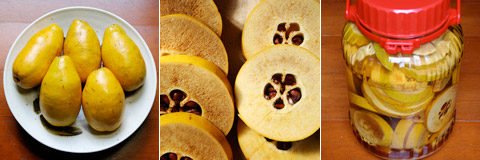
Karin, a variety of quince, is fairly common to see in the fruit section of grocery stores in the winter in Japan. I knew that people steeped it in shochu alcohol to make karinshu, like umeshu (plum liqueur) but had never made it or even tasted it. We made some today and I am now a fan of the karin quince!
In the winter season in Japan it is quite popular to make fruit liqueur with seasonal fruit such as yuzu, kumquats (kinkan), karin and a few others, even strawberries.
This year I wanted to make karinshu, but was waiting until we could find some good 35% shochu to make it with, not the run of the mill ‘white liquor’ sold in discount liquor shops and some grocery stores. When I finally found some but we couldn’t find any karin. We checked around on the internet, called some farmers and learned that the season ends in early winter so I thought that we missed our chance this year.
Karin Fruit
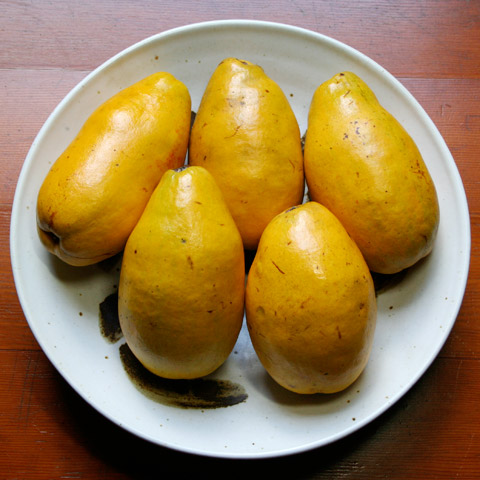
Big and waxy, oily to the touch.
Karin Fruit

Note beagle for scale.
Today when Miwa got back from grocery shopping, in a very excited voice she told me that she had a surprise for me and to close my eyes. She put a mango smelling fruit under my nose and asked me what I thought it was. I was stumped. When I opened my eyes I saw a big, waxy karin.
I had never seen or touched a karin. The fruit is quite hard and dry, so I was surprised that it would smell so fruity. It was REALLY fruity. Also the skin was almost oily. A first I thought that it was some kind of industrial wax covering, but I don’t think it was. It washed off rather easily.
Karin Fruit: Sliced and Ready to Steep in Shochu
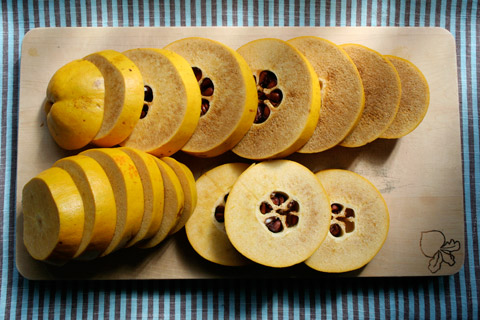
Sliced Karin Fruit – detail
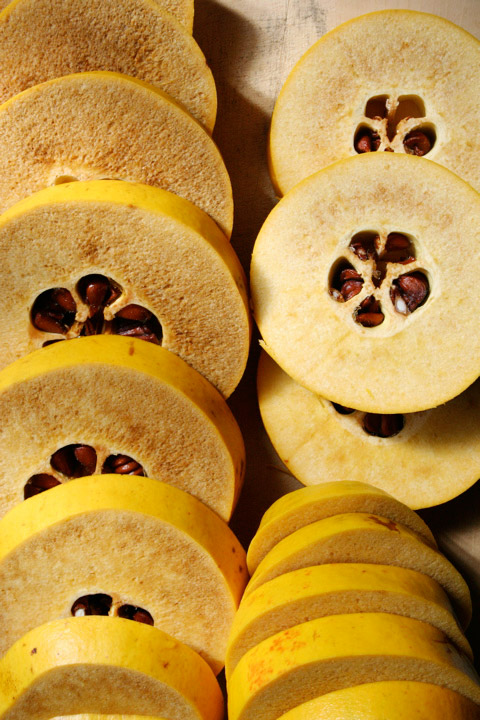
Notice the color of the flesh. The one on the left is rather brown, I think that means old. The one on the right looks more like photos I usually see of karin.
Karin Steeping in Shochu
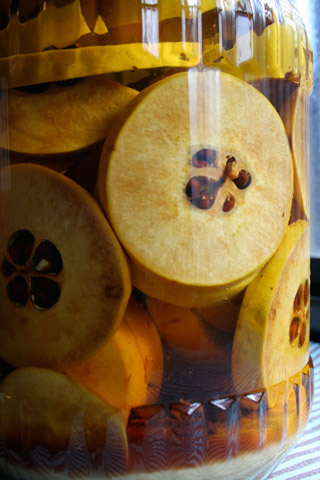
We quickly washed, dried and sliced up the karin and added them to a large glass umeshu container with sugar and high quality 35% shochu. As we worked, I was quite astonished at how this woody fruit could smell so good. I kept thinking that it reminded of a mango, but without that over the top, tropical power. Upland, temperate climate mango is how I think of the Japanese karin.
Karin Steeping in Shochu – detail
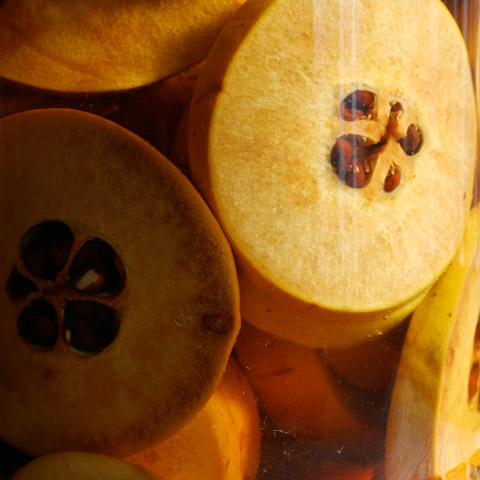
Karin Steeping in Shochu: Wait One Year
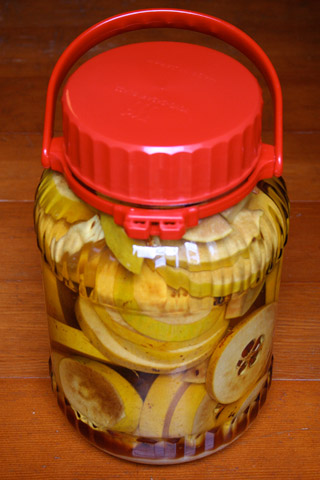
I am REALLY looking forward to sipping this one. I will let you know how it tastes — in a year!
Karinshu (Japanese Quince Liqueur) Recipe
- karin (Japanese quince): 1kg
- 35% shochu ‘white liquor’: 1.8 liter
- sugar: 300g to 1kg
Rice shochu (komejochu) is recommended, mugi (wheat) or imo (sweet potato) have too strong a taste. Vodka is an acceptable substitute. Normal shochu for drinking is 25% alcohol, 35% is required for making Japanese style liqueur because after steeping the alcohol content must be around 15% to prevent spoilage.
- Wash karin with hot water and wipe well on dry towel.
- Cut fruit into slices 1cm in thickness. Do not discard seeds, they are nutritious.
- Layer karin slices and sugar in non-reactive container (preferably glass)
- Pour in shochu into container and seal.
- After 6 months, remove karin fruit.
- Allow to age for another 6 months.
Of course we didn’t follow any recipe. We added little sugar, maybe 300 or 400 g, but will probably add more when we remove the fruit.
Karin in English
We spent quite a bit of time trying to figure out the proper English name for karin but are still not quite sure which variety of quince it properly is. I will call the botanical garden next week and try to get the definitive answer.




Thats looks like it’ll make for a tasty liqueur 🙂
I’ve never come across karin – in fact I don’t really come across quinces of any kind that often – but it’s always interesting to hear about such things nonetheless!
Been reading your blog for a while now, really incredible stuff. I’d love to have access to that kind of food 24/7.
A little research on Japanese wikipedia shows that the scientific name for karin is Chaenomeles sinensis, which differentiates it from from the other, more common quince variety called marumero in Japanese (after the Portuguese marmelo, Cydonia oblonga). Yours seem to be pretty elongated examples of the fruit, but the shape, skin color and description of the fruit’s texture are definitely a match. Hope that helps!
Great blog, I find it very interesting that such a recipe is common with french traditions, as an answer to your post I just blogged this: https://easydoesitrecipes.blogspot.com/2009/03/home-made-cointreau.html
love the pictures! has been a while since i visited and now i realize what i’m missing. my gramma makes fruit liquer all the time and this really makes me miss her. also, it’s not doing anything for my fruit liquer/sake/umeshu cravings of late. living on a student budget is so not the life! x
wow, that’s splendid. whenever i get weird/unfamiliar fruit, i always make a infusion out of it too. too bad we don’t get karin in california…
I’ve never even heard of Karin before but I will certainly go seek some out at my local Chinese / Asian Supermarket next time I’m there!
Can’t wait to try and make this liquor either 🙂
HI there where can you buy karin trees in australia
I was fascinated to come across your blog on the Karin (quince). My brother who lives in Tokyo told me about it as I am exploring quince recipes (La Cotognata: see blog) here in Italy. Found this blog through a google search and I will follow keenly!
The Real Person!
Author Teresa acts as a real person and passed all tests against spambots. Anti-Spam by CleanTalk.
Is it good to just eat?
The Real Person!
Author Matt acts as a real person and passed all tests against spambots. Anti-Spam by CleanTalk.
Hi everyone, I have planted 20 Karin trees, 3 have produced fruit for 3 years, this year the remainder are fruiting. At almost 3 metres tall. The most amazing smelling and tasteful fruit, with oily skin smelling of tropical goodness. When cooked it taste like rhubarb, apple and clove and pinkish in colour. South coast oz.. I am thinking of distilling for a very unique perfume and of course alcohol, struddle and pie fillings.