Posted in Japanese culture, shinise, wagashi on Aug 17th, 2008
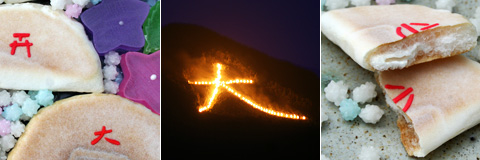
Wagashi: Daimonji Senbei and Kompeito 京都 大文字 送り火 せんべい こんぺいとう
Daimonji: A festival like non other in the entire world! Daimonji, literally means ‘great (big) character’. On a mid-August night massive bonfires are burned on 5 mountainsides surrounding Kyoto in the form of Chinese characters and pictograms to guide the visiting spirits back to the other [...]
Read Full Post »
Depachika: Kamonasu Dengaku (Baked Eggplant with Miso) 賀茂なす田楽
Nasu Dengaku must be one of Japan’s all time greatest dishes!
Read Full Post »
Doyo Ushinohi: Unagi Eel Day, July 24th うなぎ土用丑の日
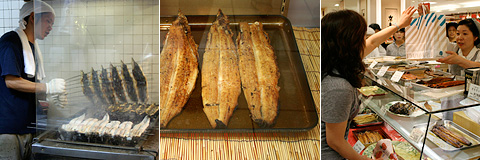
Unagi, or freshwater eel, is a very popular food in contemporary Japan and there is a dedicated ‘Eel Day’ in mid-summer (this year July 24th) on which most Japanese eat unagi.
Read Full Post »
Kaneyo Historic Kyoto Unagi Eel Restaurant かねよ 京都鰻屋さん
Kaneyo is a long-loved Kyoto eel joint thoroughly from another time and the grilled eel dishes are excellent.
Read Full Post »
Kyoto Ryokan: Kyoto Summer Hamo Cuisine at Gion Hatanaka - part 2 (鱧料理)
Hamo ryori is served! Hamo is served five different ways; sashimi, broth, sushi, tempura and grilled. While eating is essential to the ryokan experience, a ryokan is not a restaurant.
Read Full Post »
Kyoto Ryokan: Kyoto Summer Hamo Cuisine at Gion Hatanaka (鱧料理)
Mid-summer is the time for the most important festival in Kyoto, the Gion Festival. This festival is informally known as the Hamo Festival because the hamo, or conger pike eel is in season at this time.
Is the meat of the hamo especially tasty? No. But hamo [...]
Read Full Post »
Posted in wagashi on Jul 5th, 2008
Wagashi: Early Summer Biwa (Loquat) Namagashi 枇杷 (びわ) 生菓子
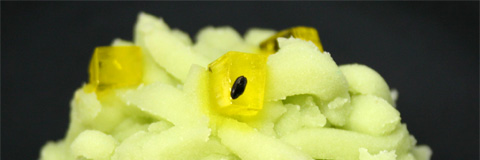
As early summer becomes midsummer, the days muggy and the nights no longer cool, the loquat, or biwa in Japanese, is a common sight in Kyoto; both in discount supermarkets and fine fruit boutiques and on the streets and sidewalks, fallen from large leafed trees overhanging a [...]
Read Full Post »
Kyoto Sake: Learning to Make Hannari Brand Umeshu in Fushimi - part 2 (北川本家はんなり梅酒)
Hannari Brand Umeshu: The tastes of Kyoto are subtle and refined, this umeshu was designed to be hannari, or delicate. In addition to classic umeshu, there are four imaginatively ‘Kyoto’ flavored versions; cinnamon, yuzu, green tea and shiso.
Read Full Post »
Kyoto Sake: Learning to Make Umeshu (Japanese plum liqueur) in Fushimi - part 1
Umeshu: Japanese plums, called ume (梅) are mainly used to flavor alcohol and vinegar and to make the incredible umeboshi, pickled plum. In early summer, it is popular to make ume flavored alcohol, called umeshu (梅酒) at home, but we were fortunate [...]
Read Full Post »
Posted in Japanese culture, wagashi on Jun 15th, 2008
Wagashi: More Kawaii, Father’s Day Wagashi (お父さん ありがとう)
Father’s Day, ‘Kyoto’ style. Yummy wagashi on the theme of work, fishing and love. Thanks Dad!
Read Full Post »