


Japanese New Year’s Osechi Ryori: Shopping for Fish at Kyoto Wholesale Food Market with Kichisen Owner Yoshimi Tanigawa
At Kichisen, they start shopping for ingredients for osechi in July. Most all shopping is done at the Kyoto Central Wholesale Market. Every morning, before shopping though is a visit to a temple even older than Kyoto and prayers to a pilgrim from previous millennia.
Master Chef’s Daily Routine
Tanigawa wakes at 5 am and leaves Kichisen at 5:30 for the market. His students, who have only gone to bed a few hours before, have already prepared the vehicle and gather at the door of his apartment, they greet and bow to their master when he appears.
This has been the routine at Kichisen for 28 years. Even though some of his students are experienced and have the eye to choose superior ingredients, Tanigawa goes to the market and chooses everything served at Kichisen himself.
In the car, he listens to NHK radio news and makes a stop at Rokkakudo Temple in central Kyoto located near Shijo-Karasuma intersection.
Kichisen Osechi: Morning Prayers at Rokkakudo Temple
Kichisen Osechi: Morning Prayers at Rokkakudo Temple
Kichisen Osechi: Morning Prayers at Rokkakudo Temple
Kichisen Osechi: Pure Land School Founder Shinran
Every morning Tanigawa stops at Rokkakudo Temple and prays. Rokkakudo is one of the oldest temples in Kyoto. The temple’s record says that it was built in 587, which is 200 years before Kyoto became capital. It is known as the origin of the Ikenobo School of flower arrangement. Rokkakudo Temple is also known for the pilgrimage of Buddhist monk Shinran, who is the founder of Jodo Shinshu, or the Pure Land School sect, Japan’s largest sect. Shinran walked down from Mount Hieizan to Rokkakudo every day for 100 days. On his 95th day, while circumambulating the temple he experienced a vision that led to the creation of the Pure Land School.
Tanigawa visits this temple daily seeking enlightenment and direction in his life’s work.
The gates opens at 5:50 a.m and he is usually the first person to enter.
At the Market
Kichisen Osechi: Local Newspaper at the Ice Vendor’s
The first stop is the ice vendors, Kichisen uses the best ice too! While the lad prepares the ice, Tanigawa scans the proprietor’s Kyoto newspaper.
Kichisen Osechi: Kyoto Wholesale Food Market Auction
(Tanigawa doesn’t participate.)
Kichisen Osechi: Asking the Price for Tarako Cod Roe
Kichisen Osechi: Tarako Cod Roe
Kichisen Osechi: Bodara Dried Cod
Cod is caught in Hokkaido and dried whole exposed to the sun and wind for several months. They are rock hard and require about 2 weeks of soaking to reconstitute and prepare for cooking. At Kichisen, cooking takes two days.
Kichisen Osechi: Bodara Dried Cod
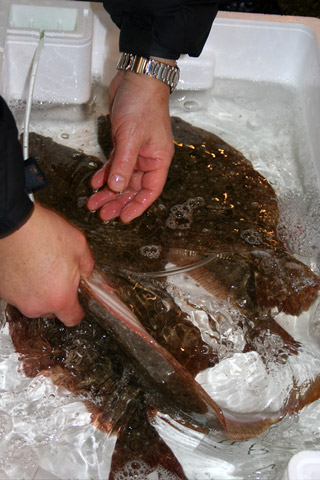
Kichisen Osechi: Examining Live Flounder
Kichisen Osechi: Examining Live Flounder
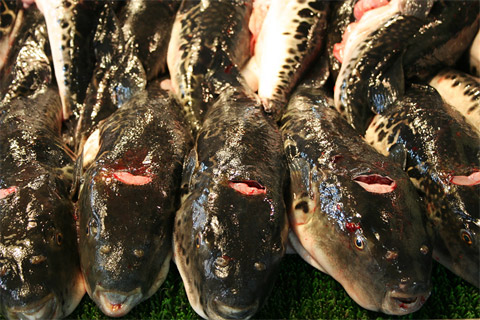
Kichisen Osechi: Fugu
Kichisen Osechi: Cleaned Fugu Pufferfish
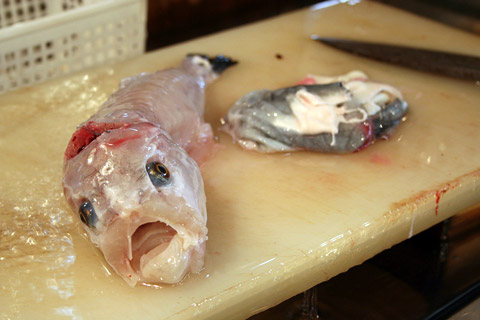
The skin is mighty tasty but the lips are poisonous. One fugu has enough toxin in it to kill about 50 people. (Fugu is not used in osechi ryori.)
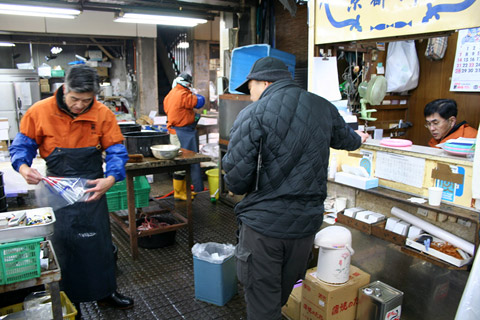
Kichisen Osechi: Check Out
Kichisen Osechi: Tuna Dealer – Maguro
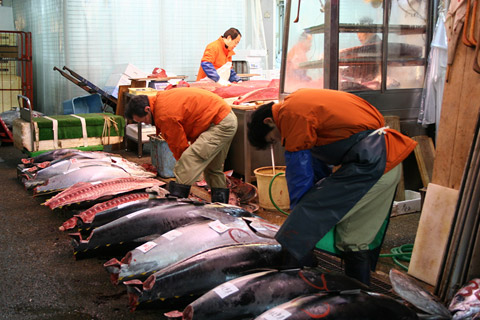
Maguro does not appear in osechi ryori.
Kichisen Osechi: Tuna Dealer – Maguro
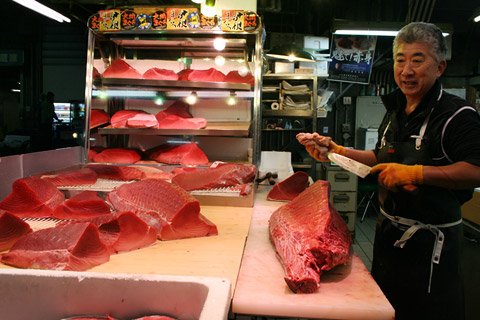
Kichisen Osechi: Tuna Dealer – Maguro
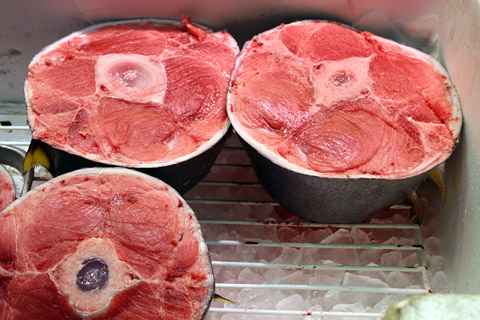
The tuna’s answer to ox tail.
Kichisen Osechi: Tuna Dealer – Maguro
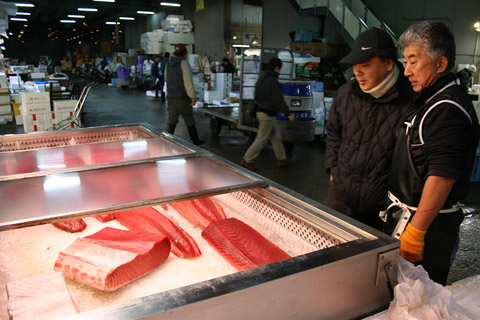
Kichisen Osechi: Check Out
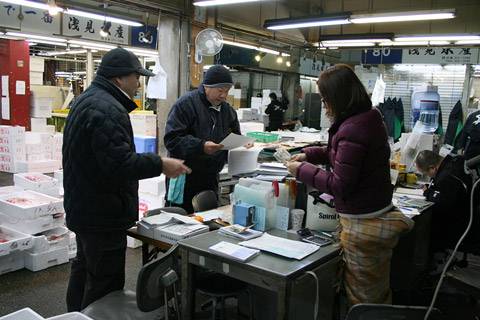
It is cold at the market in this season. Notice the woman on the right giving change, she has an electric blanket wrapped around her legs.
Kichisen Osechi: Uni Sea Urchin Dealer
Kichisen Osechi: Dried Sardine Dealer
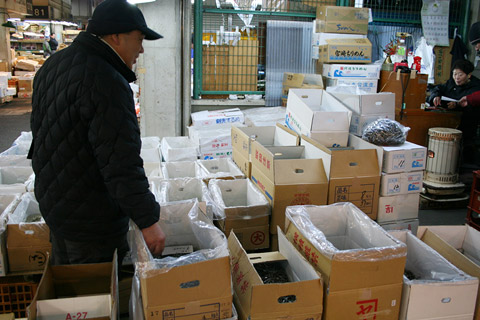
Kichisen Osechi: Dried Sardine Dealer
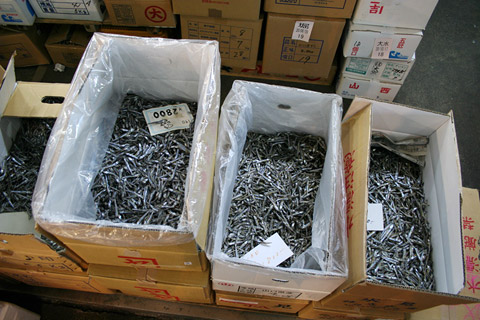
Kichisen Osechi: Dried Sardine Dealer
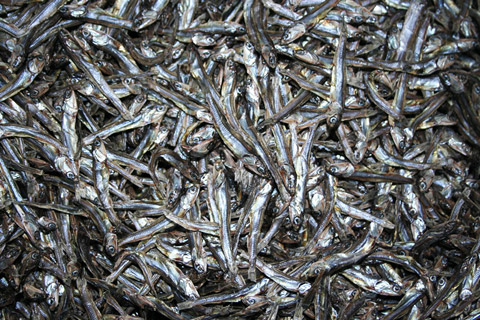
Tanigawa swears by this dealer’s dried sardines. He scooped up some for us to eat and told me to remember the taste.
Kichisen Osechi: Really Tiny ‘Jako’
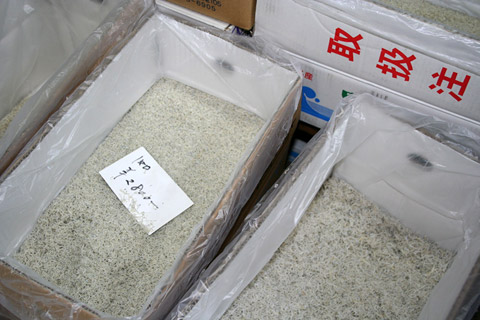
Kichisen Osechi: Inspecting Karasumi, Dried Mullet Roe

This stack of white boxes contain about $10,000 USD worth of karasumi.
Kichisen Osechi: Karasumi
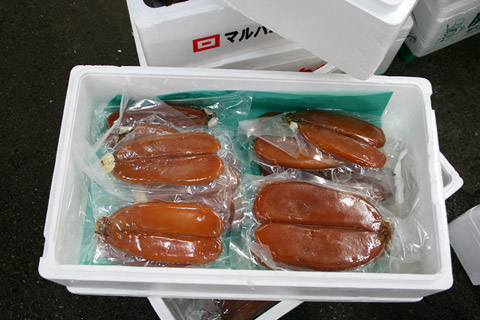
These are huge egg sacs and the highest quality, each pack costs $200-300 USD. This is excellent stuff!
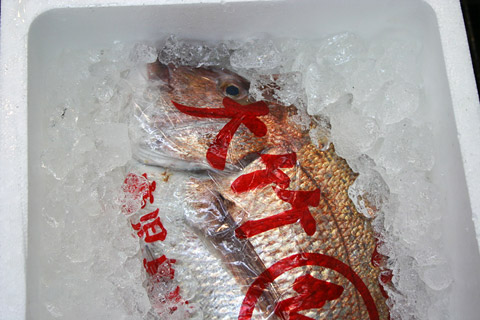
Kichisen Osechi: Red Snapper
Kichisen Osechi: Monkfish and Liver
Monkfish is popular in nabe in the winter but it is not used in osechi.
Kichisen Osechi: Monkfish Liver, Made in USA
An kimo, or monkfish liver is said to be the native foie gras of Japan. It is very good.
Kichisen Osechi
Kichisen Osechi: Namako, Sea Cucumber
(not used in osechi)
Kichisen Osechi: Shellfish
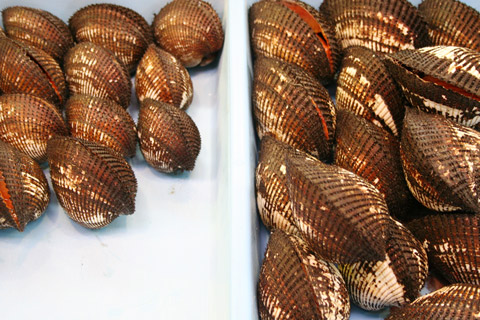
(not used in osechi)
Kichisen Osechi: Kazunoko – Herring Roe
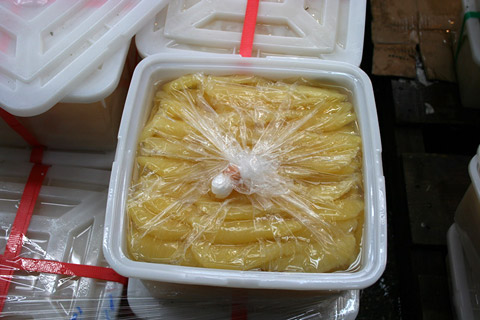
This salted herring roe is from the US. Kazunoko is a prominent feature in osechi.
Kichisen Osechi: Crab
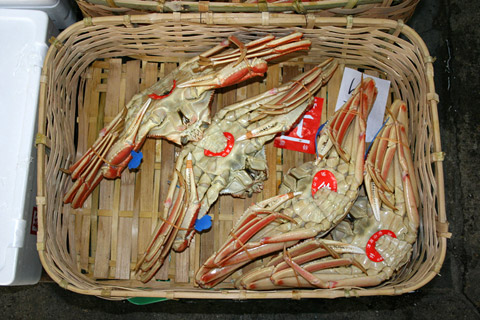
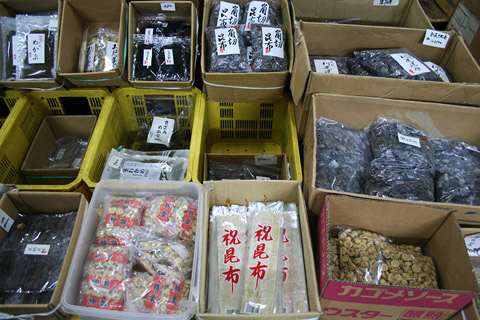
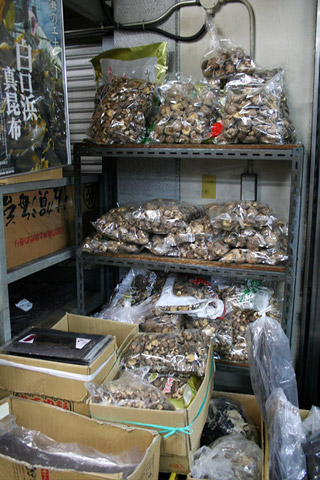
Kichisen Osechi: Inspecting Dry Goods, Kombu and Shiitake
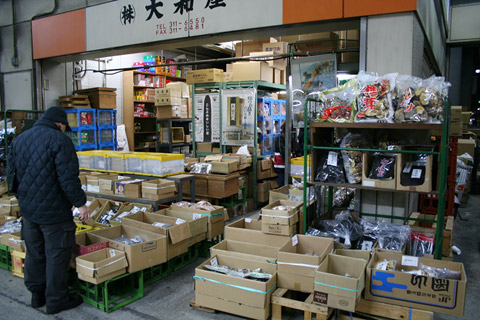
Kichisen Osechi: Inspecting Dried Kombu
Kichisen Osechi: Inspecting Dried Shiitake



great behind the scenes post!! Happy New Year!
I’ve never heard of this market before, thanks for sharing!
Hello kat, Thank you and a Happy New Year to you too! Yes, behind the scenes is always fun!
Hello Lori, Yes, this market is a rather unknown. It is nearly identical to the Tsukiji Market in Tokyo, but of course not as large. The market is located just south of Gojo-Horikawa intersection. If you go by train, it is just a 1 minute walk from JR Tambaguchi Station. If you can’t make it to Tsukiji while you are in Japan, the Kyoto Wholesale Food Market is a good alternative. Also, you can see all the Kyo-yasai there.
Great directions, thanks!
Sure!
karazumi is the same as botarga mugine right?