


Happy New Year Again! Koshogatsu Ryori and Oma Maguro Tuna 小正月料理 大間マグロ
Koshogatsu, or ‘little shogatsu‘ is traditionally observed on January 15th and marks the end of the Japanese New Year celebration. Mochi that has been offered to Shinto gods for the last half month is now quite dried out and is shattered with a hammer for eating by humans. The shards are cooked in okayu rice porridge, in Kyoto this okayu is cooked with azuki beans for the ‘rice dish’ of the last O-shogatsu meal. I was invited over to Kichisen to photograph Koshogatsu cuisine and the most expensive maguro in Japan, Oma Maguro, from the port of Oma on the northern most part of the Honshu main island. If I had been told it was wagyu beef, I would have believed it!
Japan’s Finest Tuna: Oma Hon Maguro
Oma Maguro is considered the very best tuna in Japan for sushi and sashimi. It is taken in the Tsugaru Strait between Honshu and Hokkaido via the ipponzuri, literally ‘one line catching’ method of fishing, using live bait on a single hook and line. Oma Maguro weigh several hundred kilos and the largest taken on record is 440 kg! The highest price ever paid for a tuna at Tokyo’s Tsukiji Market was for an Oma Maguro that weighed 202 kgs and sold for about $200,000 USD in 2001. Oma Maguro is famous for its fat content and exquisite marbling which looks nearly identical to Japan’s famous wagyu beef in which the cows are fed beer and apples and massaged by humans. This makes it prized for the best sushi and sashimi.
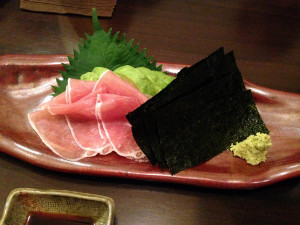
Oma Maguro Toro Sashimi
Master Tanigawa selected the most choice part of the tuna for this toro sashimi. It comes from the kama, or collar of the maguro. (More about kama at the links below.) If you like toro, you have to try the kama section of the fish.
If you go to a fine wagyu restaurant in Japan, wagyu sushi and wagyu sashimi will often be on the menu, this tuna looks identical!
Koshogatsu Ryori: Oma Maguro Toro Sashimi
Koshogatsu Ryori: Oma Maguro Toro Sashimi
Koshogatsu Ryori: Oma Maguro Toro Sashimi

Koshogatsu Ryori: Oma Maguro Toro Sashimi
Koshogatsu Ryori: Oma Maguro Toro Sashimi
Is it wagyu, or is it tuna?
Traditional Koshogatsu Dinner: Azukigayu (Azuki Bean and Mochi Rice Porridge)
After photographing the toro sashimi, Master Tanigawa invited me to try some Koshogatsu azuki bean okayu rice porridge and two slices of toro. Of course I was only too happy to accept!
The okayu, though including azuki beans was not sweet, it was almost bland. The kagami mochi inside was well cooked and soft enough to eat but still I could tell that it had been dried out. While eating it in a dimly lit, chilly room, I could easily imagine what shogatsu was like a thousand years ago in Kyoto. The toro sashimi, or course a very new addition to the culinary scene in Kyoto, and it was pretty incredible. I have had some pretty fine toro but this was different. It did just melt on my tongue. (I won’t torment you with the details on this one.)
Koshogatsu is not regularly celebrated by most Japanese now, though a fair number of people observe it in Kyoto. This was my first time to eat Koshogatsu food such as kagami mochi. Thank you Master Tanigawa!
Kichisen Ikebana Decoration and Otoso
The silver pot is filled with otoso: New Year’s sake.
Shogatsu Decoration: Kagami Mochi
Do you remember this offering from this article? Today is the last day of O-shogatsu and the kagami mochi in the shogatsu offerings is broken apart and in Kyoto eaten with azukigayu (azuki bean rice porridge).
Koshogatsu Ryori: Azukigayu and Oma Maguro Toro Sashimi
Oma Maguro Toro Sashimi – detail
The master said that these two pieces would set you back about $100 USD.
Koshogatsu Ryori: Sujiko Kasuzuke
Sujiko is ikura still in the egg sac. I love ikura but had never had it flavored with sake kasu (sake mash lees), it was astounding!
Koshogatsu Ryori: Eating Azukigayu and Mochi
This is a detailed article about Oma Maguro:
Japan’s love affair with Oma’s tuna | The Japan Times Online
KyotoFoodie Burikama articles:
Buri kama Shioyaki (Salt Grilled Yellowtail Collar)
Buri-zanmai: Buri Kama Shioyaki (Salt Grilled Fatty Yellowtail Collar)



beautiful looking maguro, I had to read your post again because I really thought it was wagyu!
Wow that is incredible especially considering tuna aren’t beer fed and massaged. Looks like you got to try it out, lucky you! Sujiko marinated in sake kasu is one of my favourites. Kind of reminds me of the flavor of Shuto.
I am so envious of your life! everything you post here are so perfect!
wow. thank you for introducing me to this. not only am i impressed with how it looks, i am intrigued to know how it tastes. 100 bucks? that may have to wait till the recession ends!
Wow, that’s gorgeous! I’d love to taste that one day. One can dream, right?