


Sake: Learning to Make Sake at Kitagawa Honke Sake Brewery in Fushimi – Part 4
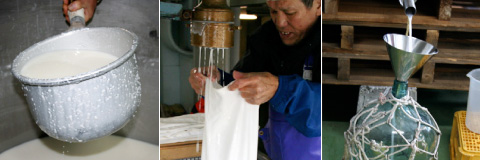
I visited the Kitagawa Honke sake brewery to see the pressing of the mash for Daiginjo.
This is part 4 of our sake series.
Pressing the Mash
The kurabito crew closely monitor the progress of the fermentation and the toji (brew master) decides when it is time to stop the fermentation and press the mash and make sake. As the fermenting mash is ‘alive’ and no two lots are exactly the same, though it takes about one month, it cannot be said for certain when the fermentation process will be complete. I had hoped to see the pressing of lot no. 18 that I had been following but I couldn’t make it over to Kitagawa Honke in time to see it done, so I have photos here of lot no. 20, which is the exact same Daiginjo.
In Japanese the pressing process is called shibori (搾り) and mash is called moromi (醪).
Here we see photos of the labor intensive ‘handcrafted’, premium sake. The mash is scooped out of the vat and into fabric bags. These bags are placed on top of one another and the sake is slowly pressed out. First by the weight of the moromi filled bags, then mechanically, but as this is premium sake, only a minimum of pressure is applied.
Pressing the Mash – moromi (醪)
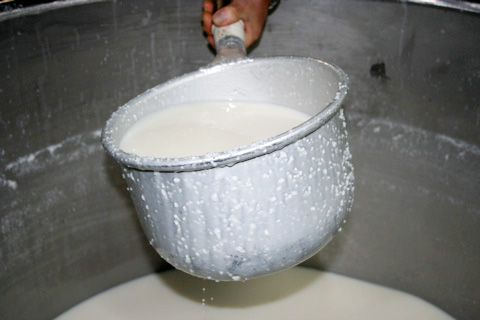
This is mash (moromi), very yummy stuff itself. This is what traditional Japanese ‘home brewed’ sake, or doburoku is. Doburoku is unpressed moromi.
Pressing the Mash – automation
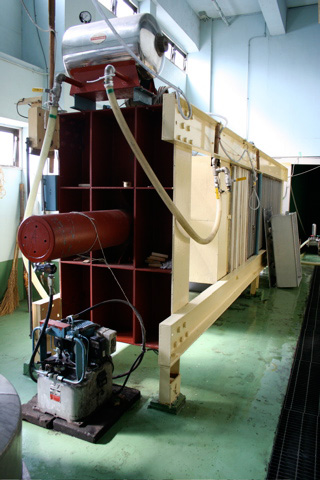
For larger production lots an automated press is used. This is what one looks like.
Pressing the Mash – shibori (搾り)
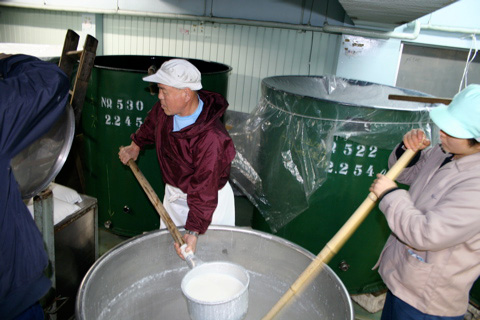
The kurabito crew continuously and gently stirs the moromi and scoops it out and it is poured into long, cylindrical bags.
Pressing the Mash – shibori
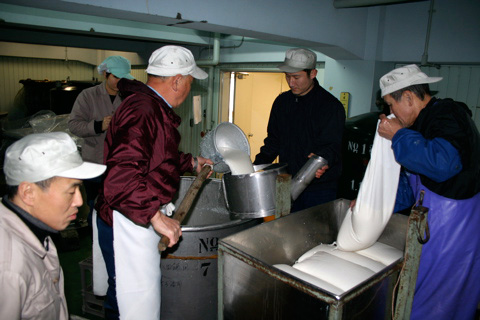
The mash filled bags are stacked on top of each other inside a steel sieve.
Pressing the Mash – shibori
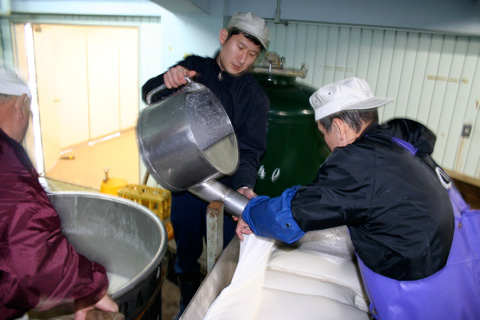
The weight of the moromi itself is sufficient to force the sake out.
Pressing the Mash – shibori
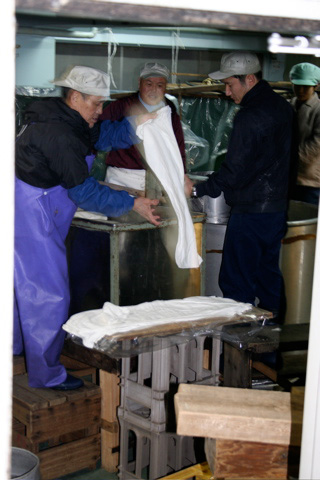
Fabric shibori bags
Pressing the Mash – shibori
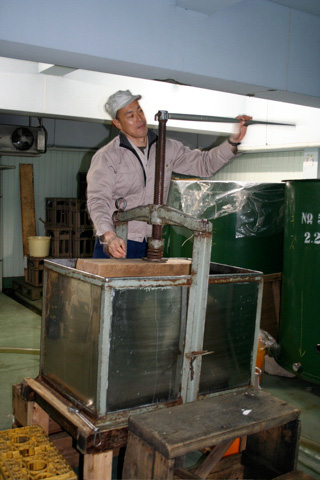
Here Tashiima Toji (Brew Master Tajima) applies some pressure.
Pressing the Mash – shibori
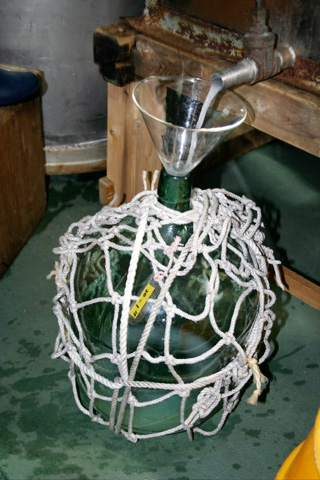
Into this glass container is called a tobin, sake slowly trickles down.
Pressing the Mash – shibori
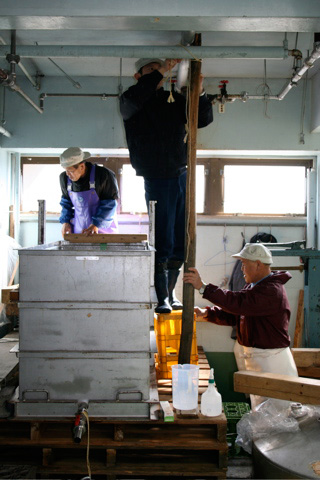
Here the kurabito crew is setting up another press.
Pressing the Mash – shibori
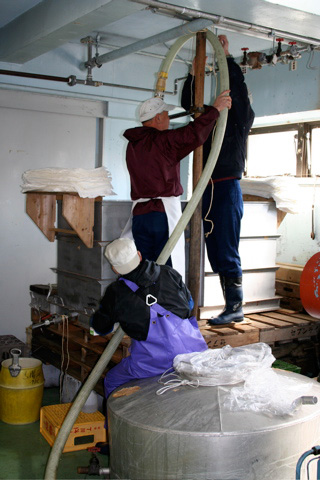
Here the moromi is mechanically pumped into the bags, but it is the same lot and the quality is the same.
Pressing the Mash – moromi detail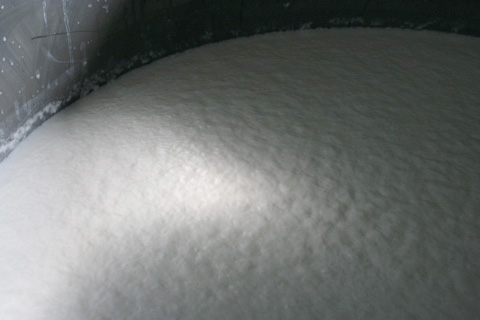
Before stirring, the surface looks waxy as it is so thick. The fragrance is pungent, earthy and fruity. I wanted a scoop!
Pressing the Mash – shibori
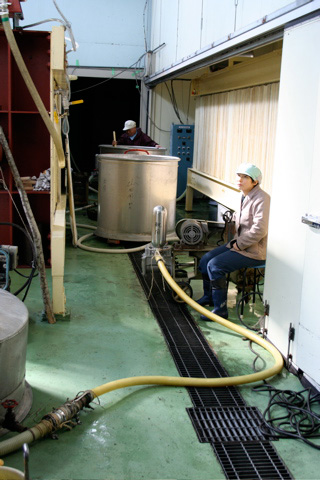
The moromi is pumped through the hose from the vat in the background. The large machinery on the left and right are mechanical filters (and not being used here).
Pressing the Mash – shibori
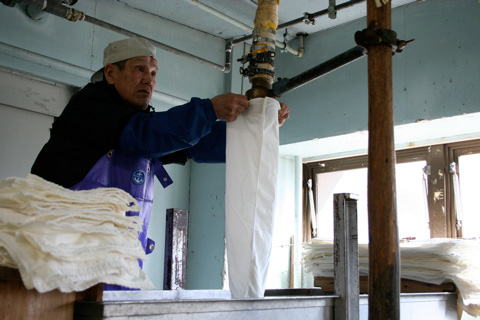
Filling the bags with moromi.
Pressing the Mash – shibori
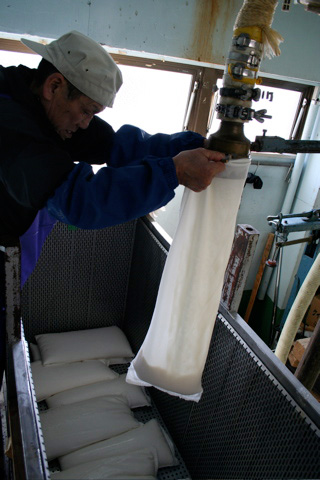
A look inside the sieve.
Pressing the Mash – shibori
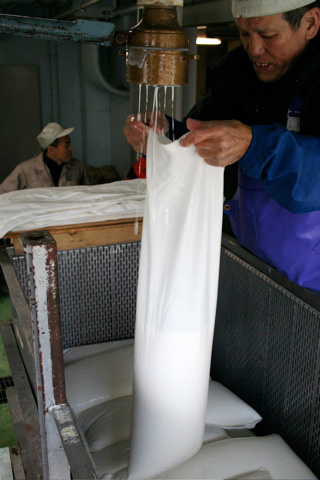
Filling bags.
Pressing the Mash – shibori
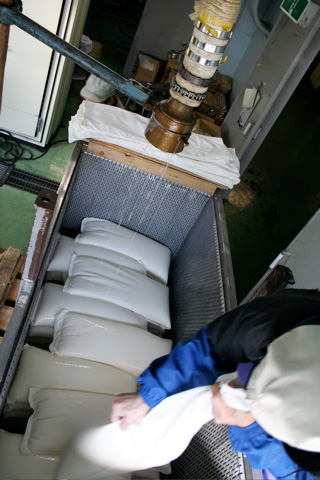
Stackin ’em up like cordwood.
Pressing the Mash – shibori
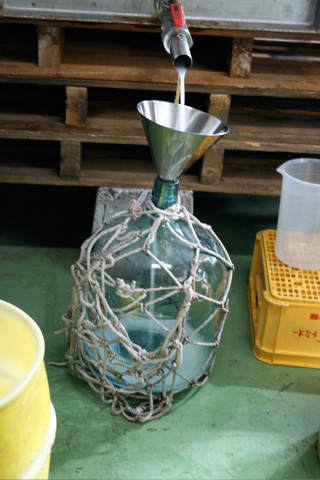
Sake filling up the tobin.
Pressing the Mash – off to the lab
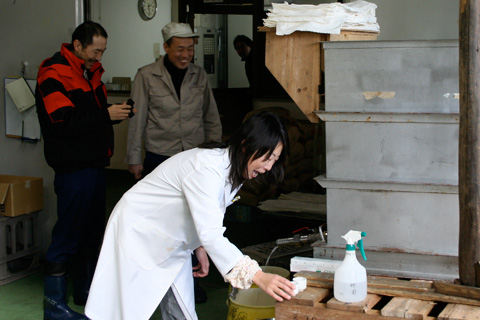
The lab technician gets some (tastes some and collects some for testing). I got a taste too. As it is not yet aged it is a bit rough around the edges, and it is quite high powered as it is not diluted with water. Yummy, never-the-less!
Pressing the Mash – in the lab
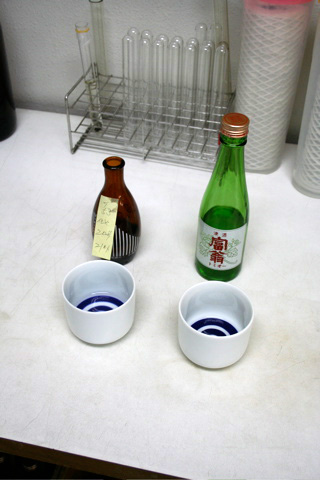
Sake Series:
Learning to Make Sake: Part 1
Learning to Make Sake: Part 2
Learning to Make Sake: Part 3
Learning to Make Sake: Part 4
Learning to Make Sake: Part 5





Thank you for this series of blog post! Interesting to see both manual method and big hose to fill the bag to press. A bit curious if they are different grade of sake, do you know?
Hi Etsuko,
I think I tried to point it out in the post, sorry if I wasn’t clear. This method of shikomi takes time and is done in small lots. So, several presses are needed. Pictured here are both the same production lot, so they are identical in grade, quality, etc.