


Sake: Learning to Make Sake at Kitagawa Honke Sake Brewery in Fushimi – Part 3
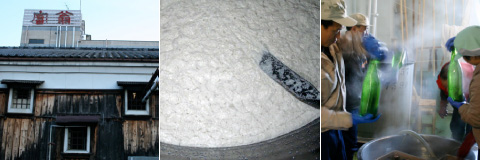
I went back to the Kitagawa Honke sake brewery to check-up on the progress of lot no. 18.
This is part 3 of our sake series.
While I was visiting the brewery I was able to see the difference between mash that was just started (no. 20) and mash that was almost done (no. 18) fermenting. I also got to see the pasteurization process for premium, handcrafted sake. I peeked in on the koji production room and got to see 1000 liters of fine sake pumped into a tank for aging.
lot no. 18 Daiginjo
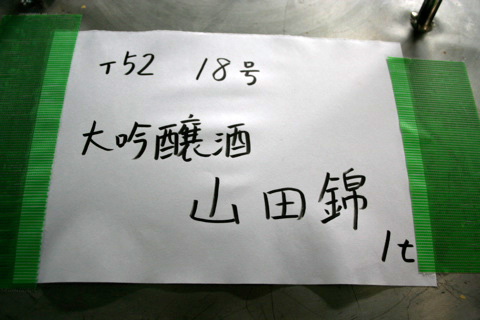
This is posted on the vat, it says the kind of sake that it will be (Daiginjo) and the kind of rice used (Yamada-nishiki). The other notes are; tank no.52, production lot no. 18, 1 ton of rice.
lot no. 18 Daiginjo – inside the vat
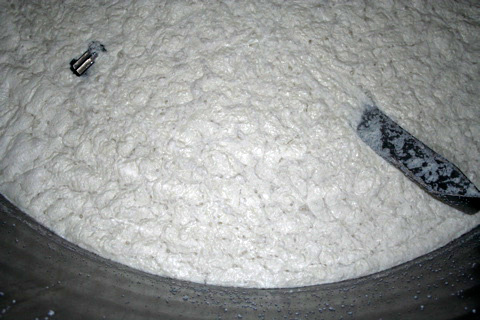
Now just a dense froth. The fragrance inside the tank is sweet, pungent and fruity – but lethal. The vat is filled with carbon monoxide, produced naturally from the fermentation. I put my head inside and inhaled deeply. I felt like I have been punched — hard! It took my breath away. (Kiddies, DON’T try this!)
lot no. 20 Daiginjo
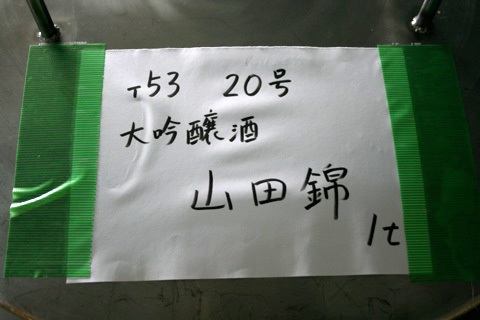
lot no. 20 is the same kind of sake, daiginjo made with the same yamada-nishiki rice. Tank no. 53, production lot no. 20, 1 ton of rice.
lot no. 20 Daiginjo – inside the vat
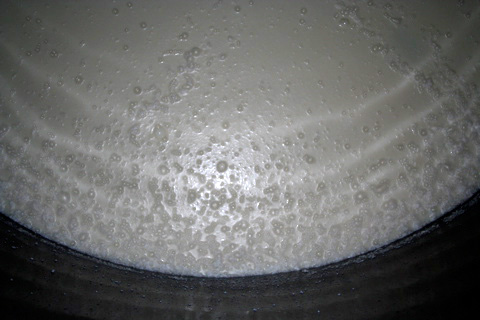
As no. 20 just started a few days ago, it still looks like liquid. The bubbles are naturally produced by the fermentation.
A Bucket of Ice
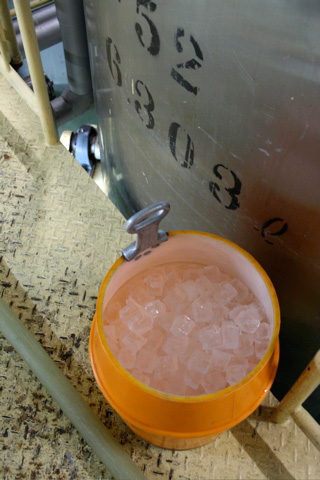
Next to tank no. 52 is a bucket of ice. This is added to reduce the temperature. Remember, the lower the temperature the better the sake.
Pasteurization of Premium Sake
When I arrived today the kurabito crew was pasteurizing a small batch of Kitagawa Honke’s premium, handcrafted sake. Pasteurization of fine sake involves heating the bottle in a barrel of hot water for a short time and then dunking it in ice water.
Pasteurization
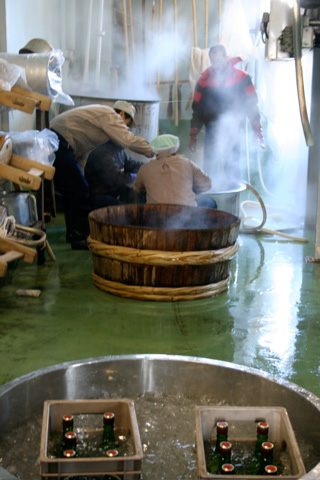
Notice in the foreground the bottles that have been placed in the ice water. These are done.
Pasteurization
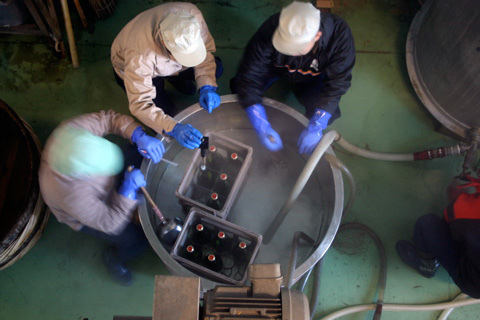
The kurabito on the left is holding a thermometer to measure the temperature of the water. The kurabito in the center is holding a thermometer the measures the temperature inside the bottle.
Pasteurization
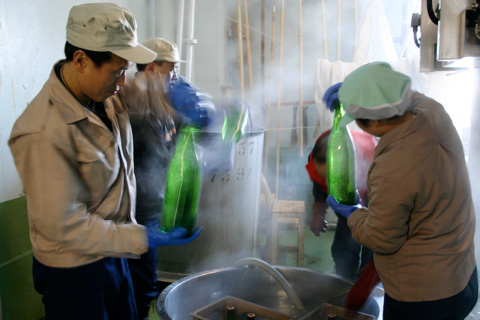
After reaching the necessary temperature, the bottles are gently turned upside down, back and forth several times to ensure complete pasteurization.
Pasteurization
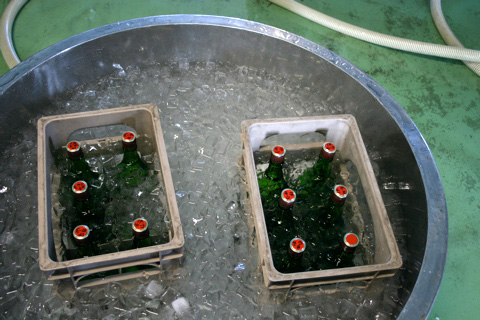
The final step it to chill the sake. This premium sake is pasteurized in lots of about 1 dozen 1.8 liter bottles.
Koji Production
This is the one warm room in the entire brewery! Koji needs warmth to grow. Remember, the most important ingredient in the sake production process is koji, so great care is expended in it’s production. After the koji is produced, it is added to the vat with to feed the fermentation process.
Koji Production – cleaning the incubator
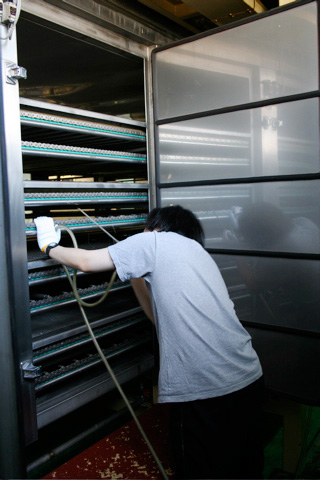
Here one of the kurabito is cleaning out the koji incubator. Any koji that remains must be blasted out with pressurized air before the next lot is produced. Notice the kurabito is wearing just a t-shirt. It is very warm here, the rest of the brewery is just above freezing!
Koji Production – the end of the line
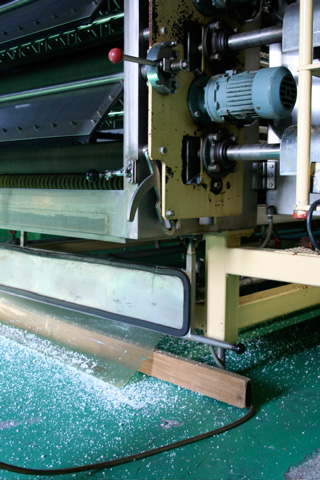
Some koji that spilled on the floor at the end of the conveyor belt.
Koji
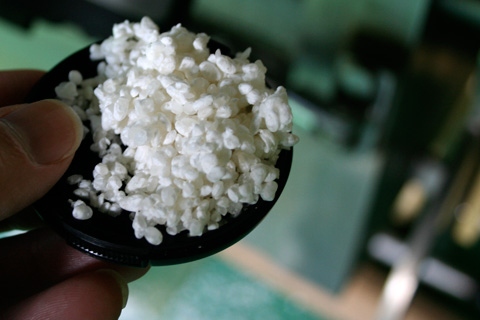
I scooped up koji for a close-up photo. It is soft, powdery white growing on the steamed sake rice. It tastes quite sweet.
Koji
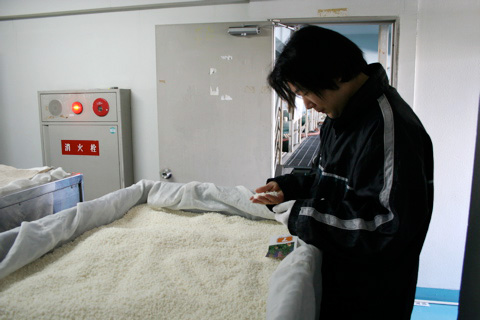
Here the kurabito is having a look at the koji as it is being moved in trolleys to the fermentation tank.
Aging Sake
Here the sake is being moved from the vat after pressing to the aging tank where it will age for 6 months to a year. This is for larger volume production and is not 100% handcrafted, but very good stuff, never-the-less!
Aging Sake
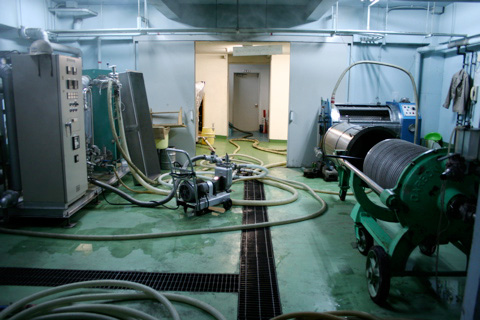
The machinery on the left will heat the sake and pump it up the the second floor where it will be put in a tank to age.
Aging Sake
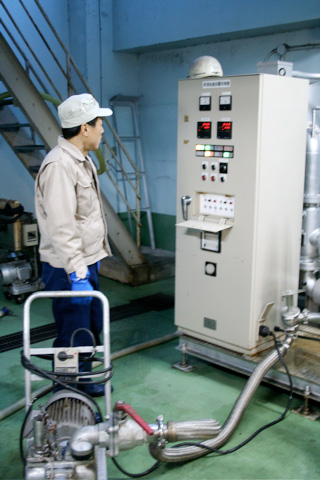
Tashima Toji (Brewmaster Tashima) inspecting the settings and getting ready to start.
Aging Sake
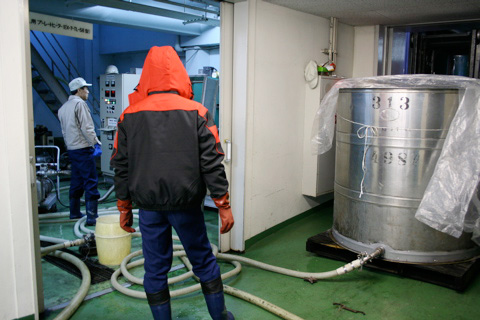
The vat on the right contains the sake that will be pumped up to the floor above for storage.
Aging Sake
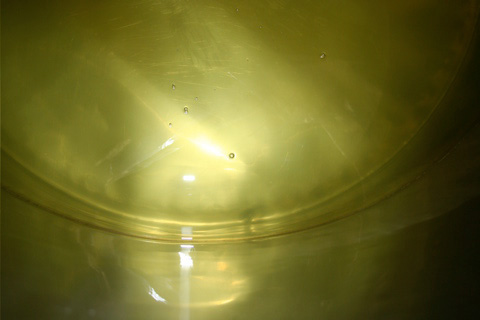
A shot inside the vat. Sake is actually slightly golden in color.
Aging Sake
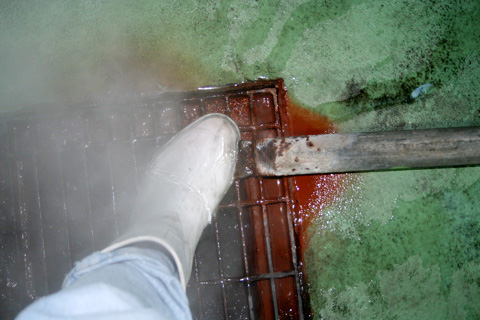
A testament to the cold, I used some boiling hot water coming out of a pipe to warm my feet inside my kurabito rubber boots. It got real warm, real quick!
Aging Sake
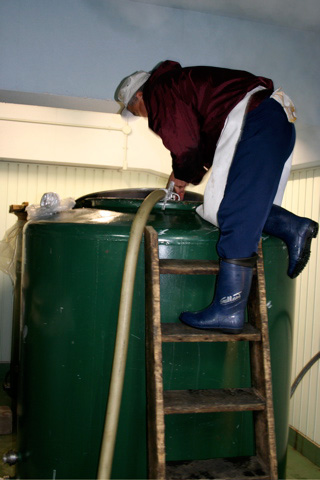
This is the hose that transports the sake up from the floor below. This was truly an amazing sight! (see next photo)
Aging Sake
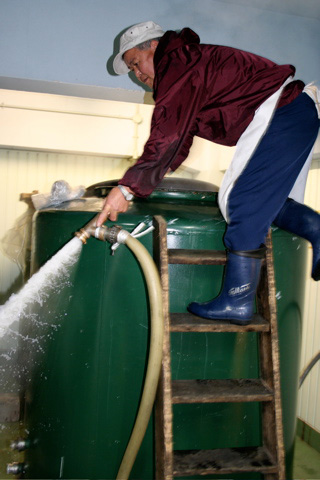
At the end, the sake becomes water as water is used to push the last of the sake through the hose. The kurabito frantically dips his finger into the sake stream, tasting it as quickly as possible. Just as it starts to taste a little watery, he pulls the hose out of the tank, blasting a few hundred liters of water all over the place (and probably more than a little fine sake too!). Quite a sight!
Aging Sake
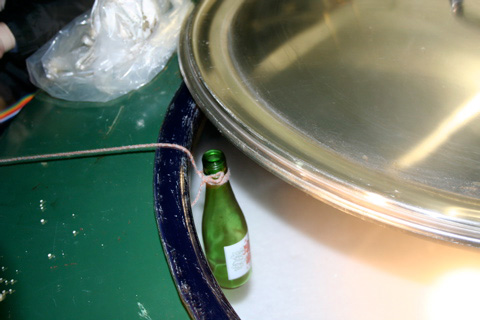
Taking a sample for the lab. A bottle is dunked and filled to be taken downstairs to the lab.
Aging Sake
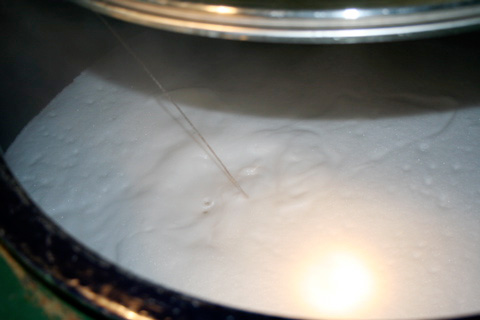
While shooting a couple shots up here, in just a minute or so I got quite a sake buzz! Why? This sake is hot, the vapors are intense and quickly intoxicate. I remember thinking that I was in a sake steam room! Completely different than sake served hot. It was quite wonderful!
Aging Sake

Capping the bottle for the lab.
Aging Sake – sealing the tank
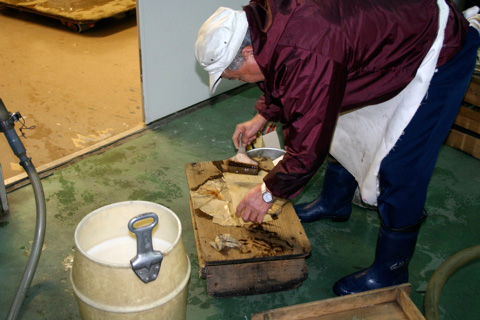
Rice starch glue is being painted on paper that will be used to seal the tank.
Aging Sake
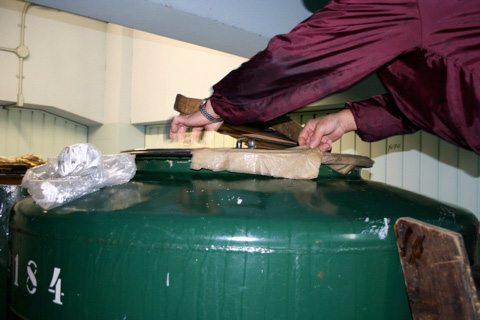
Sealing the cover.
Aging Sake
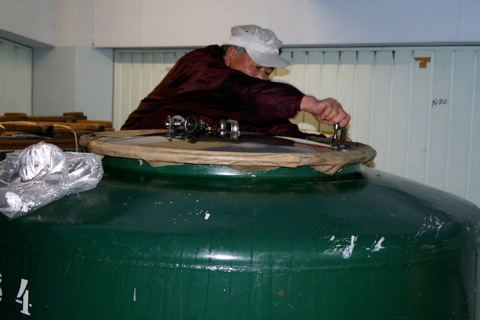
Final step, clamping down the cover. Now wait 6 months to a year!
The Brewery
I snapped a few shots of the brewery.
The Brewery

This is a shot from the roof of the new wing of the brewery over looking the old (tile roofs).
The Brewery
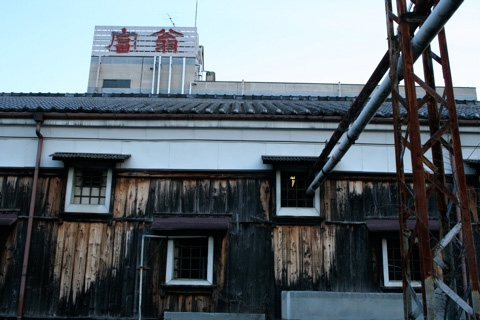
The old brewery with the roof of the new wing in the background.
The Brewery
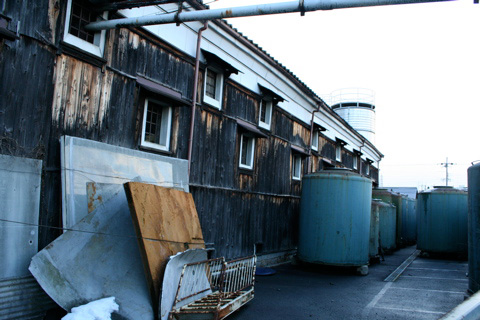
This is what ‘old Fushimi’ looked like.
Sake Series:
Learning to Make Sake: Part 1
Learning to Make Sake: Part 2
Learning to Make Sake: Part 3
Learning to Make Sake: Part 4
Learning to Make Sake: Part 5



I love this series. I was lucky to attend a conference in Kyoto about 12 years ago, and had some wonderful food. Everyday at the conference I had a soba dish (hot) with a piece of dried fish in it (saba?) which I really liked.
One detail about sake 3: “The vat is filled with carbon monoxide, produced naturally from the fermentation. I put my head inside and inhaled deeply” You would be dead! Carbon monoxide is what comes out of the exhaust of cars – due to incomplete combustion. Yeast does a better job and turns sugar into carbon dioxide – not a killer at low concentrations, but still will give you a nasty kick.